How much difference just a couple of weeks makes! Two weeks ago we were caught up in the appalling realisation of how resident black Britons had been driven out of the country. Today, as I write, we've been celebrating a royal wedding in which it's clear that, in the service, a definite move was made to recognise and incorporate black or mixed-race identity into the heart of the establishment.
The Windrush scandal ought to have shocked us to the core. The readiness of government to see people whose identity documents pre-dated the imposition of new rules about residency by many years thrown out of the country and forced to return to places that many of them could scarcely remember as a child was a brutal reminder of the indifference of policy to people.
Was it a racist policy? Many have said so, and I am in no position to disagree. What's clear is that, at the very least, targets for lowering illegal immigration were set and approved with such zeal that no scope was left for the intelligent examination of people's lives and circumstances. Numbers mattered; people did not.
That was scandal enough. But as a historian, the wider implications of what was going on here also concern me. It was as if the complexity of human identity was simply being erased. Who we are is not one thing, one dimension of geography or biology or history. We're made by multiple points of experience – not just where we were born, not just where we live now, not just what we choose to be now. We're creatures of time and the constant interweaving of human relationships: our families' experiences, our DNA, our home background and aspirations, all these and other factors shape what make us.
That's why fascination with genealogy is such a feature of our time. Programmes like Who do you think you are or Long lost family demonstrate how all of us, no matter how famous or obscure, in the end are made by a family history that stretches back well beyond what we can remember. Recovering that history, or something of it at least, is often profoundly moving for people, as they recognise the roots of problems they have experienced, or recover hidden or altogether unknown aspects of the emotional landscape in which they were raised.
So there is a kind of chilling reduction going on in the assumption that what constitutes an 'illegal immigrant', and therefore someone not really 'one of us', can be defined simply by the failure to produce certain documents – landing cards, old tax returns perhaps – that people were never told they needed to retain in the first place. This is bureaucracy like a mindless machine, setting targets, implementing actions, ignoring real situations, and above all turning away from the inhumane implications of what is being done. It has such sinister overtones of what has gone on elsewhere and at other times in the last century that I surely don't need to spell the parallels out.
This is particularly sensitive when we think of the highly complicated legacy of empire. I'm not one of those calling for a wholesale purging of names, statues, and other cultural signs of British history. I don't think we should pull down Nelson's column, or Churchill's statute in Parliament Square, for example. But we do have to expand our idea of British history, to reckon not only with embarrassing or scandalous aspects of our past, but also with the way our past as a former imperial power encompasses not just the British Isles, but innumerable other parts of the world. And not just that, but also experiences of marginalisation and oppression that have simply not featured all that much in the favoured national stories. Our sense of history and personal identity, if we can raise our horizons that way, takes us well beyond the familiar and comforting.
And then lands right back on our own patch. Because if we want to understand who we really are, we have to complicate our own story and see ourselves as individuals as inheritors of a patchwork history, in which race, class, gender, region, faith commitment, politics and work have all played their part. The forced 'sending back' of people who have lived for half a century and had every encouragement – until recently – to think of themselves as British residents contradicts what we instinctively know and feel – surely – about what we are as human beings.
But forward fast to today, and a royal wedding. Of course we can make too much of these things. But it is nonetheless very ironic that the inclusive spirit of the service was a world away from the reality of the experience of dozens of black Britons forced to undergo hostile scrutiny about their residency, and even exile. Something good may come of that.
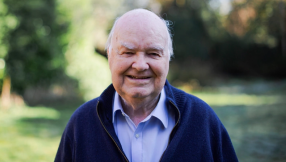
Rev Dr Jeremy Morris is Master of Trinity Hall, Cambridge.
This article appears on ViaMedia News and is used with permission.