On December 10, the UK's special envoy on freedom of religion or belief presented a rosy picture of tolerance in Sudan. The following day, the US State Department renewed its designation of Sudan as a country of particular concern. America ranks Sudan with Iran, North Korea, Burma and Saudi Arabia, citing the harassment of religious minorities.
The tolerance or intolerance of belief usually reflects a country's broader attitude to freedom of speech and civil society. What accounts for the gap between UK and US perceptions of a regime classified as unfree by the impartial watchdog Freedom House, and whose leader, Omar Bashir, has been indicted for genocide?
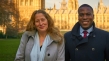
Lord Ahmad, a Foreign Office minister, visited Khartoum last summer. Responding to a question from Lord Alton about the well-documented persecution of Christians, he reported: 'What I saw on the ground of the relationships between the leaders I met from the Christian and Muslim communities was very positive. Indeed, in some of the challenges the Christian communities have in running their schools, particularly with the governor of Khartoum, the imams from the Muslim community were acting as their advocates.'
Ahmad's sunny conclusion left one Sudan specialist incredulous. 'Evidently, no one at the British embassy told him that the Sudanese government would control which religious leaders he would meet' – leaders who could be counted on to point to 'small problems' but to highlight 'how wonderful the situation in Sudan is now'.
A local lawyer defending leaders of the besieged Christian community who regularly face arrest, confirmed that 'Lord Ahmad's analysis does not correspond with the experience on the ground.' Activists working for freedom of religion and belief in Sudan say the UK embassy staff has never attempted to meet them, whereas other embassies have.
Campaigners cite the torture of nine Christians in Darfur in November by agents of Sudan's intelligence service, the listing of 25 churches in Khartoum that will be confiscated or destroyed so their land can be developed by friends of the regime, the bombing of church-run hospitals and schools in the Nuba Mountains, and the fact that every pastor has been arrested at some point.
It brings to mind the USSR's stage-managed propaganda trips in the 1930s. Several prominent intellectuals such as George Bernard Shaw and Sidney and Beatrice Webb, returned to the UK denying that Stalinist policies were causing mass starvation. Yet the novelist Arthur Koestler, visiting in the same period, witnessed scenes of horror in Ukraine; the philosopher Bertrand Russell also saw through the façade presented to him by Communist party officials. The fans of the 'new Soviet civilisation', gulag and all, became known as 'useful idiots' by Stalin's henchmen.
The NGO Open Doors reports on Sudan: 'The government regularly arrests and intimidates Christian leaders....When interacting with Sudanese Muslims, Christians must be extremely cautious, as any mention of their faith can be construed as an "act that encourages apostasy against Islam." Some Christians are arrested on charges of espionage, and many churches have been demolished, with others on an official list awaiting demolition. In areas with ongoing conflict, Christians are attacked indiscriminately.'
Moreover, the UK Foreign Office ignores President Bashir's own forthright statement on the position of religious minorities under his regime. Speaking in 2010, he said he would amend the Sudan constitution so, 'there will be no time to speak of diversity of culture and ethnicity...Shariaa [Islamic law] and Islam will be the main source for the constitution, Islam the official religion, and Arabic the official language.'
Evidently, promoting economic ties with the regime is a higher priority for the UK, despite what it says about respecting human rights and freedom of expression. According to government ministers, engagement with the pariah regime will lead to business opportunities. Hence the ongoing UK-Sudan Trade and Investment Forum meetings and visits to Khartoum, despite the country's unpromising commercial environment, as documented in detail by the World Bank ; Sudan gets the lowest possible marks for corruption from Transparency International.
Sudan is also key to Britain's attempts to stem migration at the point of origin in the Horn of Africa. However the Khartoum Process has been criticised for using former Janjaweed militia, famous for ethnic cleansing in Darfur, to prevent migrants reaching Libya. Sudan itself is one of the largest sources of refugees fleeing to the UK to avoid persecution at home. It is therefore perverse that the UK looks to Sudan for help, when the regime's policies are the cause of migration.
Meanwhile, the US has renewed its designation of Sudan as a state sponsor of terror. Yet the UK persists in prioritising its Brexit-era aims of reducing migration and building new trade alliances. Neither policies are likely to succeed, while they leave a stain on Britain's integrity.
Maddy Crowther is co-executive director of Waging Peace, which supports Sudanese refugees in the UK.