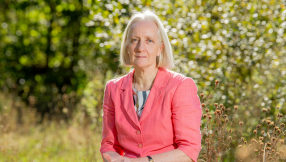
The head of Christian Aid Amanda Khozi Mukwashi is in Washington DC and New York this week to urge world financial leaders to make the global economic system fairer for all.
Amanda Khozi Mukwashi said the "global economic system is broken" as she prepared to join high level meetings at the World Bank and Finance for Development conference.
She was to warn leaders that the "instatiable" drive for growth was pushing the Earth beyond its ecological limits, while pledges to support the poor were going unfulfilled as financial gain continues to be put before people.
Leaders will hear that the current system "devalues" billions of people living in the Global South and that the "oppression of marginalised people is deeply embedded in how the global economic system operates".
While there are signs of "real progress" in achieving the UN's Sustainable Development Goals (SDGs), she says an "urgent rebalancing" of the global financial system is needed to ensure that people in developing countries are not "left behind".
The International Monetary Fund (IMF) was singled out for particular criticism as she said it had "done little work" to address the structural issues perpetuating gender inequalities like unpaid care work and a lack of public services that would enable women to work.
She will also advocate for a cleaner global economy that is no longer driven by fossil fuels, arguing that the continued use of fossil fuels is unsustainable and puts "existential pressure" on people and the planet.
Speaking ahead of the meetings, she warned of the risk to development posed by climate change. She said she had been struck by the plight of a woman she met in Ethiopia who was struggling with crop failures and the death of livestock as a result of rising temperatures.
"This woman had never been in a classroom or read a book. And yet she described the tragedy of climate change and sustainable development in one sentence and, all too unusually, in a language that is universal," she said.
"For climate change must not be an issue that is understood only by experts. Instead, it is about poverty and social justice and affects the world's poorest most: it is essential that these people are enabled to have the agency not just to be able to survive, but to thrive. After all, we cannot truly flourish if our neighbours are suffering and in danger.
"Climate change is a bigger threat than any one human being irrespective of power or position. For my friend in Ethiopia and many millions of others, it is about life and death."