Archaeologists at Winchester Cathedral have been piecing together over 1,300 bones found concealed in centuries-old mortuary boxes and believe they may have found the remains of one of England's most enigmatic queens.
Working out of a temporary laboratory erected in the cathedral's Lady Chapel, the team of researchers believe some of the bones may belong to Queen Emma, the daughter of Richard I of Normandy and the wife of King Ethelred and later the Danish invader King Cnut.
A powerful figure in late Saxon England, she was the mother of King Edward the Confessor and King Hardacnut and great aunt to William the Conqueror, who used his ties to Emma to back up his claim to the English throne.
There are six mortuary boxes in total being investigated by the team, each dating back around a thousand years.
It has traditionally been believed that the boxes contained the remains of kings and bishops from before the time of the Norman conquest in 1066, but this has never been confirmed.
A tantalising clue to the identities of the remains has been the inscription of names on the chests, which include eight kings, two bishops and one queen.
Now researchers are working to establish whether the contents match up with the names.
Part of the work has required making sense of the fragments spread across the six boxes as different skeletons became mingled over time.
A major development came in 2015 when radiocarbon dating revealed that the bones were from the late Anglo-Saxon and early Norman periods - the same periods as the names on the chests - rather than a later period in the life of the cathedral.
The researchers have also now identified the remains of a mature female, although they are not yet certain if it is Emma.
A surprising discovery has been that of two adolescent boys whose presence in the chests was not recorded. Their identity is also still unknown but they died between the ages of 10 and 15 some time in the mid-11th to late 12th-century. According to the researchers, they were almost certainly of royal blood.
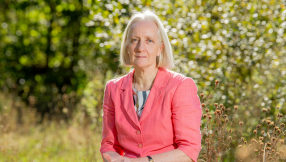
Professor Kate Robson Brown, who is leading the investigation, said: "We cannot be certain of the identity of each individual yet, but we are certain that this is a very special assemblage of bones.
"The names on the chests indicate this is the first formal royal mausoleum of the early kings and queens who were pivotal in the formation of Wessex and early England."
The investigation is ongoing. The findings to date will be part of a major new exhibition at the cathedral Kings and Scribes: The Birth of a Nation, which opens on May 21.