Essex County Council has hit the headlines after the newly elected leadership from Reform UK decided to introduce the Lord’s Prayer and the national anthem to council meetings.
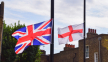
In addition, the council has banned the display of Pride flags and pro-LGBT events at public libraries.
Prior to the May local elections the council had been dominated by the Conservative Party since 1997, Reform however took the council by storm and now holds 52 of its 77 seats.
Speaking to the BBC, Reform Councillor Jaymey McIvor said, “As a party, we're proud of our Christian heritage, so it's absolutely fitting to have the Lord's Prayer at the start of our meetings."
The decision to conclude council meetings with the national anthem was cautiously welcomed by Conservative Councillor Andrew Schrader, who described himself as an “ardent monarchist”.
Schrader warned however that symbolic actions like introducing prayers, flags and anthems need to be backed up by good governance at the local level, a view shared by Lib Dem Councillor Stephen Robinson.
Kent County Council has also introduced the Lord’s Prayer and the national anthem into meetings, although it did so after a vote.
Prayers at the beginning of official business are by no means new in politics. Every day in Parliament begins with prayers, although practically speaking many MPs use the practice of opening prayers to simply reserve a seat in the chamber.
Although there are 650 members of the House of Commons, there are in practical terms just 427 seats. Using a “prayer card” to obtain a seat, especially on busy days like when Prime Minister’s Questions takes place is common.
In recent years there have been minor campaigns to abolish parliamentary prayers, with the All-Party Humanist Group, in conjunction with Humanists UK and the National Secular Society arguing against the practice, which they have described as “prayer privilege”. Their attempts have so far been unsuccessful.