More than half of Brits say their dependence on social media has hampered their ability to make friends in 'real life'.
In a survey of 3,053, six in 10 people said they spend less time meeting existing friends in person.
A majority (55 per cent) also felt that their constant social media use was negatively impacting their relationships in the real world by making them 'more superficial'.
The research, commissioned by Pernod Ricard, also found that only 23 per cent of Facebook connections were regarded as genuine friends.
Despite being more digitally connected than ever, a third of those polled expressed a wish to have more close friends than they currently do. The average person was revealed to have 12 friends but only felt they could confide in around four of them.
In addition to social media use, participants in the survey felt that real-life friendships were being hindered by long work hours, parenthood, or the physical distance between them and their friends.
Those polled said they had drifted apart from seven friends on average as a result of not meeting up in person enough.
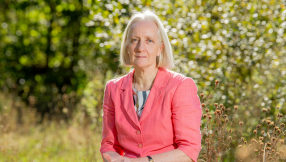
Professor Robin Dunbar, British anthropologist and evolutionary psychologist, said: 'The limit of friends you have is set by your capacity to invest time and mental effort in them.
'That's why people who are in love typically can only cope with four other close relationships - because they're already investing a lot of time and effort in the object of their affection.
'However the more close relationships you have, the higher your levels of happiness are.
'With this in mind, making small changes to our lifestyles like cutting down on social media can give us more time and space in the 'real world' to embrace convivial moments with friends.
'And doing this is what creates close, fulfilling and happy friendships.'
The survey did reveal some positives, though, as over a fifth said they had made new friends through Facebook, Twitter or Instagram in the last half year. And for a fifth (22 per cent), social media had a positive impact on their social lives.
However, there was widespread concern about the ability to make friends, with 59 per cent saying they felt the UK was a less convivial place now than five years ago.
Alexandre Ricard, chairman & CEO of Pernod Ricard, said: 'There's a real yearning for connection and sharing in today's world.'
The poll was carried out by Pernod Ricard to coincide with the launch of its new documentary, 'The Power of Conviviality'.