
A new poll of churchgoers has found that Christians in the UK believe “they are being discriminated and turned down for promotion” because of their faith.
One in five said that they had faced opposition at work because of their beliefs. More than half of them revealed that they had suffered some form of persecution for being a Christian, the Sunday Telegraph reported on Sunday.
What could shock Christians around the world, Churchgoers interviewed in the ComRes poll for the newspaper, said that they are already facing discrimination at work and one in 10 churchgoers said they have been rejected by family members because of their religious beliefs.
As many as 44 per cent said they had been mocked by friends, neighbours or colleagues for being a Christian, and 19 per cent said they had been ignored or excluded for the same reason.
They also claimed that they are being discriminated against at work, with five per cent saying they had been turned down for promotion due to their faith. The same number said they had been reprimanded or cautioned at work for sharing their faith.
There has been a series of cases over recent months featuring Christians who have been suspended after expressing their religious views, including a teacher who complained that a staff training day was used to promote gay rights.
Churchgoers believe that these incidents reflect growing intolerance towards Christianity in Britain.
Nearly three out of four of those questioned said that there is less religious freedom in the UK now than 20 years ago, and one in five said persecution of Christians is worse in this country compared to other European nations.
The new guidelines issued by the Government can only add to more concerns for the Churchgoers, it warns that employees will face dismissal and are “highly likely” to be accused of harassment if they share their faith with colleagues at work. The guidelines were drawn by the British Humanist Association (BHA), with the help of £35,000 grant from Equality and Human Rights Commission (EHRC), a taxpayer-funded body.
Andrew Copson, director of education at the BHA said, "The law specifically protects people from being intimidated or confronted with a hostile environment in the workplace,” pointing out at Employment Equality (Religion or Belief) Regulations 2003.
"Systematically undermining someone's beliefs or persistently attempting to convert someone would lead to the creation of a hostile environment,” he was quoted as saying by The Telegraph.
However, legal experts have attacked the guidelines as "nonsense" and Christian groups have condemned them as "propaganda".
Although the EHRC declined to comment on the content of the BHA guidelines, a spokesman said: "The commission's funding programme supports a wide range of organisations, both faith and non-faith groups, in keeping with its aim of promoting good relations and a better understanding between those from different religions and beliefs.
"This is one of many such projects to that end. This isn't about supporting a particular belief or lack of belief over another, but encouraging debate."
ComRes asked 512 worshippers between April 21 and May 1. The respondents were selected through different Christian media, from liberal publications through to evangelical websites.
The results are weighted to the exact denomination and churchmanship profile as defined by the 2005 Church Census.
Meanwhile, church leaders, including the Archbishop of York, Dr John Sentamu, have urged Christians to "wake up" and defend their beliefs after the suspension of Caroline Petrie, a community nurse, for offering to pray for a patient.




-

Archbishop of Canterbury withdraws award given to Muslim cleric who praised Bin Laden
-

Calls for Church of England to be 'rooted in scripture' ahead of General Synod elections
-
How the new General Synod could move beyond the present disagreement over same-sex relationships
-

Most practising Christians are evangelical, study finds
-

No part of London should become a free speech, gospel exclusion zone
-
Church of England blessing same-sex relationships 'a bridge too far'
Most Popular
News
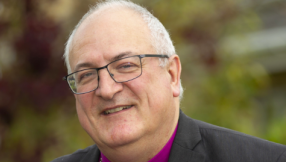
Bishop of Lincoln resigns after suspension over safeguarding complaint
The Rt Rev Stephen Conway will step down as Bishop of Lincoln on 1 October, seven months after being suspended from ministry.
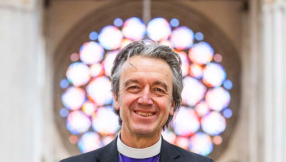
What links Tommy Robinson, Andrew Tate and the CofE’s newest bishop?
It’s not every Church of England bishop that can claim connections to both Tommy Robinson and Andrew Tate. But Andrew Rumsey is an exception.

From Genesis to Revelation: The ambitious AI project turning the Bible into music
Micah Fiechter is the founder of the Music Bible, a project that has used AI to convert the entire Bible into music form across a range of genres. Christian Today spoke to Micah to find out more about what inspired him to start the project and the impact he hopes it will have.

Concerns for Pakistani teenage boy allegedly forced into Islam
Forced conversion is a problem in Pakistan.








