There's bad news for vicars, priests and other church ministers in the latest results of a long-running research project.
So look away now, if you lead a church, wear a clerical collar or otherwise find yourself regularly standing at the front in services.
The worrying news is that British people trust taxi drivers and restaurant staff more than clergy and priests to tell them the truth, according to the latest findings of an annual 'Veracity Index.'
Just 55 per cent of people aged 16 or above said they would trust clergy or priests "to tell the truth", in results published by research organisation Ipsos.
This marked a stunning 30 per cent drop over the almost 40 years the survey had been conducted. In contrast, trade union officials saw their rating increase by the same amount since 1983.
Top of the latest trust list were nurses, engineers, doctors, scientists and teachers, with clergy/priests in 17th place, and care home workers, restaurant staff and taxi drivers among groups being rated more highly – and all credit to them for achieving their higher rankings.
At the bottom of the table were journalists, estate agents, government ministers, advertising executives and politicians generally.
In a wider, global perspective of who people trusted, an international Ipsos survey showed British clergy/priests polling just 33 per cent – but they were among the most highly rated clerics in the 28 countries surveyed.
Denmark's clergy came top – at 46 per cent – with Sweden, India, United States and South Korea also ahead of Britain. Clergy from Chile, Spain, Argentina and Turkey were the least trusted.
Globally doctors, scientists, teachers and the armed forces were the most highly trusted, with advertising executives, government ministers and politicians generally at the bottom of the table. More than 21,000 respondents across the 28 nations were asked to rate a range of professions on their trustworthiness, from 1 to 5.
So what should Christians make of the results?
These findings make sobering, unsettling reading, and maybe ought to be presented to everyone training for ordination or considering entering public Christian ministry. They present a challenging snapshot of the general climate in which church leaders are ministering in 21st century Britain, and internationally.
Some may seek to put the results into context by saying that fewer people come into direct contact with priests, vicars or other Christian ministers these days, so the responses are unlikely to be based on personal experience. Declining congregations, and falling numbers of church weddings, christenings and funerals have added to the distance between the Church and the wider public.
Critics may retort that churches need to work harder at making contacts, building relationships, and growing their congregations. Not an easy message for hard-pressed ministers to receive warmly.
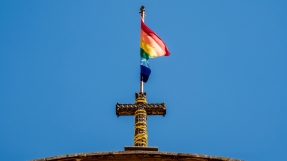
The findings are likely also to have been affected by widespread coverage of high-profile child abuse and other scandals that have impacted churches, as well as controversies over sexuality issues, including gay marriage.
Situations where churches have protected sex offenders or failed to take seriously the concerns of victims have rightly damaged the Church's reputation and discouraged trust.
The findings – and the alarming long-term drop in trust – could be a 'wake up' call to our churches. A warning that we need to do more to be places of integrity, of transparency, of safety and of welcome.
And that we need increasingly to be showing the love of God in action in how we serve our local communities – and explaining the Christian motivation for that service.
Trust can easily be lost. Winning it back can take decades. Every selfless caring action, in the name of Christ, in communities across a nation, can play its part in earning back that trust.
But, based on the research, it seems like a long road back...
Rev Peter Crumpler is a Church of England minister in St Albans, Herts, UK, and a former communications director with the CofE.