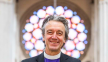
The Church of England's chief education officer, the Rev Nigel Genders, has defended the place of collective worship in schools following the launch of a legal challenge by two parents in Oxfordshire who claim that their children are being religiously indoctrinated by Christian school assemblies.
Lee and Lizanne Harris, who are atheists, withdrew their children from the church-led assemblies at Burford primary school in the Cotswolds, because they objected to them taking part in Christian prayers and watching re-enactments of biblical stories.
Burford primary was a non-faith school at the time the Harrises enrolled their children but this changed in 2015 when it joined the Church of England Oxford Diocesan Schools Trust (ODST).
Although the schools is now part of the ODST, it is not a Church of England school as it has the designation of a non-religious "community school".
The Harrises claim that since the school's acceptance into the ODST, they have witnessed "harmful aspects of evangelism spreading into assembly" and that this is "unlawfully" interfering with their children's right to an education "free from religious interference".
The 1944 Education Act requires schools in England and Wales to provide "an act of collective worship", but parents maintain the right to withdraw their children from participation.
The Harrises claim that their children were not given a meaningful alternative to the Christian assembly after being placed in a room with an iPad under the supervision of a teacher.
They argue that a meaningful alternative would be an inclusive assembly. Their case is to be heard at the High Court in November.
Writing in The Sunday Times, Rev Genders defended the place of collective worship in non-faith schools, arguing that it offered a moment of pause for children at a time when many "feel besieged by social media, are weighed down by pressure and report poor mental health".
He urged schools not cave in to pressure from secular campaign groups.
"Collective worship offers ten minutes in a day for children to pause and explore the big existential questions such as 'Who am I?' 'Why am I here?' and 'How then should I live?'" he said.
"Offering this in the context of authentic Christian worship is not 'religious indoctrination' but a chance for children of all faiths and none to develop spiritually and gain perspective in an otherwise crowded day.
"There is much evidence of the value of collective worship to children and young people, which is why thousands of community schools also have strong partnerships with local churches and faith groups.
"What happens in schools must be evidence based and should not be in response to secular pressure group campaigns."
Anne Davey, chief executive of ODST, told The Telegraph: "ODST is confident that Burford Primary School has acted entirely appropriately, and has followed statute in ways that are similar to all local or indeed national schools.
"It has provided exactly what the law requires, which includes provision for children to be withdrawn if parents so request."