The majority of British people believe that religion does more harm than good, the Huffington Post has revealed.
A recent survey undertaken by the internet newspaper found that only 25 per cent of Brits believe religion is a force for good, though this figure was slightly higher within the younger generation. 30 per cent of 18-24 year olds polled said that religion does more good than harm.
Other statistics drawn from the study include that just 8 per cent of over 2,000 people asked described themselves as 'very religious', compared to 60 per cent who said they were not religious at all.
Additionally, a fifth of those who claim to be very religious said religion was in fact harmful to society.
"This confirms something I've found in my own surveys and which leads me to conclude that religion has become a 'toxic brand' in the UK," Linda Woodhead, professor of the sociology of religion at Lancaster University told HuffPost UK.
"What we are seeing is not a complete rejection of faith, belief in the divine, or spirituality, though there is some to that, but of institutional religion in the historic forms which are familiar to people."
Woodhead argued that "liberal values, equality tolerance [and] diversity" can often be found more easily outside of religious groups, which may have contributed to a decline in religion across the UK.
The survey also found that only 6 per cent of British people believe that atheists are less moral than religious people. Andrew Copson, chief executive of the British Humanist Association, said this underlines that "whether you are religious or not has very little to do with your morality".
"Most people understand that morality and good personal and social values are not tied to religious belief systems, but are the result of our common heritage and experience as human beings," he explained.
"Not only that, people understand that religious beliefs themselves can be harmful to morality: encouraging intolerance, inflexibility and the doing of harm in the name of a greater good. We only need to look around us to perceive that fact."
Wading into the debate that circulated earlier this year, Copson also argued that to perpetuate a belief that the UK is a 'Christian country' is "unsustainable".
"We need an inclusive shared society and an end to the privilege of religious institutions that allows a third of our state schools to be controlled by religious groups, unelected clerics to sit in our Parliament, and discriminatory religious organisations to provide what should be secular public services," he said.
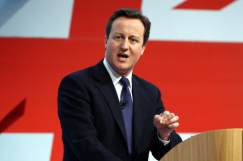
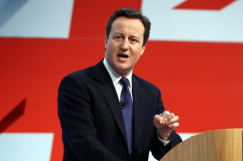
In April, Prime Minister David Cameron declared that the UK is a Christian country; an assertion that was backed up by politicians and faith leaders alike.
Archbishop of Canterbury Justin Welby said: "It is a historical fact (perhaps unwelcome to some, but true) that our main systems of ethics, the way we do law and justice, the values of society, how we decide what is fair, the protection of the poor, and most of the way we look at society...All have been shaped by and founded on Christianity."
Farooq Murad, of the Muslim Council of Great Britain, argued the same. "No one can deny that Britain remains largely a Christian country...we respect that," he said.
However many others rejected Cameron's statement, and an open letter – signed by 50 leading academics and scientists including author Philip Pullman and broadcaster Dan Snow – contended that his words served to "foster alienation and division in our society".
"At a social level, Britain has been shaped for the better by many pre-Christian, non-Christian, and post-Christian forces," read the letter, published first in The Telegraph.
"We are a plural society with citizens with a range of perspectives, and we are a largely non-religious society."
The 2013 census revealed that 59 per cent of UK citizens identify themselves as 'Christian', which signified a decrease of 13 per cent in a decade.