There's a fascinating article in the The Atlantic from last year that for some reason is popping up on social media feeds again. It is Power Causes Brain Damage by Jerry Useem, subtitled 'How leaders lose mental capacities – most notably for reading other people – that were essential to their rise'.
The essence of its argument, drawn from studies by Berkeley psychology professor Dacher Keltner, is that powerful people 'acted as if they had suffered a traumatic brain injury – becoming more impulsive, less risk-aware, and, crucially, less adept at seeing things from other people's point of view'. Keltner studies behaviour, but Sukhvinder Obhi, a neuroscientist at McMaster University, found corroborating evidence when he studied the brain activity of powerful and not-so-powerful people. Power 'impairs a specific neural process, "mirroring," that may be a cornerstone of empathy', as Useem puts it.
So powerful people stop being able to empathise with others because their brains actually change. They are worse at identifying what someone in a picture is feeling, or guessing what a colleague might feel.
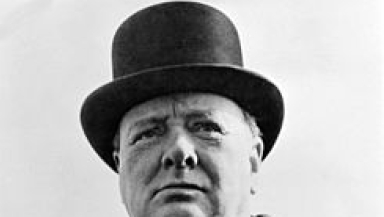
The result is 'executive hubris', of which there are a myriad examples. Powerful people can't understand why others find their behaviour reprehensible. They lose the ability to see themselves as others see them. Useem cites examples from Churchill through to Pepsi CEO Indra Nooyi, all of whom were capable of bad behaviour for just this reason. The article does not mention Donald Trump, which might be down to heroic self-restraint by its author.
What seems to help is when powerful people recall a time when they were not powerful. An experience of powerlessness provides some protection against this loss of empathy.
In an age when the church has uncritically adopted corporate values around 'leadership', equating it with 'ministry' in a way that is often deeply unhelpful, are there lessons for those in the church who find themselves in positions of power? After all, there's no shortage of bishops, pastors and parachurch executives who find themselves exposed when their empires come crashing down. In the US, it might be megachurch pastors like Mark Driscoll or Bill Hybels, elevated by their congregations to an unchallengeable height. In the UK, it's more likely to be those in ecclesiastical heirarchies who lose the ability to see themselves for what they have become, making terrible decisions about what we now call safeguarding because they can't empathise with victims. The notion that their very brain patterns have been affected by their eminence might seem uncharitable, but it seems to fit.
We don't have to go to the very top of church command chains to see this, though. Any minister is vulnerable to the power trap. He or she – usually he – is, if not nowadays elevated six feet above contradiction in a Victorian pulpit, usually given a platform denied the congregation. Ministers are deferred to, they make decisions and 'cast visions', and they tend to be the point around which the church revolves, especially if they have been there a good while. All this is heady stuff – almost literally brain-turning, as our article shows.
All the more reason for ministers to resist. They can do it in a most Christian way, by – as Keltner says – recalling their own experiences of powerlessness, perhaps most vividly at a communion service. But they can also challenge the whole idea of ministerial power, so much part of the fabric of church life. Leadership can still be effective even when it's diffused; power can be devolved. It's not easy, because congregations rather like having someone else to take responsibility (and blame). But the notion of the pastor as the all-knowing chief executive has very little scriptural support – and it turns out it's not very good for us, either.
Follow Mark Woods on Twitter: @RevMarkWoods