Yesterday's attack on a Jerusalem synagogue by knife-wielding terrorists should not be seen as religiously-motivated violence, according to the head of a Christian human rights charity.
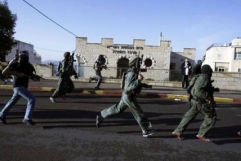
The attack was carried out by two Palestinian cousins using meat cleavers, knives and a handgun. It left five dead – four worshippers and a policemen – before the attackers were shot dead by police.
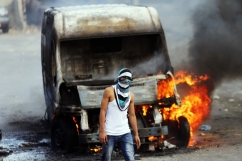
It is the latest in a string of incidents arising from tensions at the Temple Mount, revered by both Jews and Muslims. Extremist Jews have been flocking to the site in increasing numbers, seeking the right to pray there.
However, Rev Chris Rose, director of the Amos Trust, told Christian Today: "It's very important that this is not presented as a faith-based confrontation. It is about land – two groups of people have claims on it and the question is how both groups can live on it."
He drew a distinction between the motivations of Palestinians in East Jerusalem, under Israeli rule since the 1967 war, and those of Islamic State in Iraq and Syria, saying: "It is not a religious conflict and it is really important that we differentiate between what is happening with ISIS and in Palestine and Israel.
"The Palestinian community in East Jerusalem has been increasingly suppressed, with high unemployment and poor amenities, and they are more and more squeezed by Israeli settlers. The waves of violence that have been happening have been in no small part pushed by Jewish extremist groups and the Israeli government has not been effective in countering them."
He said that it was "hard to know if the synagogue was an obvious place to target for attackers for those who wanted to make a symbolic statement or because it was a place where Orthodox Jews would be coming together with lower levels of security".
The Patriarchal Vicar of Jerusalem and Palestine, Mgr William Shomali, said: "We are deeply saddened by the escalation of violence in Jerusalem. We condemn every act of violence and we call on Israelis and Palestinians for mutual respect, to work together so that a political solution could be found to the conflict. This vicious circle of violence, of counter-violence, of reprisals is seriously detrimental to the peace process."
Human Rights Watch said that there could be "no justification" for the synagogue attack but warned that "The Israeli response to this attack should be limited to those responsible and adhere to the rule of law."
HRW spokeswoman Sarah Leah Whitson said: "Palestinian leaders who believe attacks on Israeli civilians are justified by 'revenge' are deeply mistaken – nothing justifies this terrible attack on Jews praying in a synagogue.
"Israel should also realise that responding with excessive force or arbitrary actions, as it has done in other cases, only fuels the cycle of abuses."
Palestinian President Mahmoud Abbas condemned the attack. He also called for an end to Israeli "provocations" surrounding Jerusalem's shrines.
Israel has vowed harsh retaliation, with Prime Minister Benjamin Netanyahu immediately ordering the demolitions of the homes of the attackers.