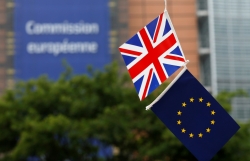
The EU referendum on 23 June will be the biggest political decision in Britain for a generation. I believe that Britain is stronger, safer and better off in the EU. I am proud that my party, the Labour party, is the only major national political party campaigning for a Remain vote.
In its 2,000 year history, Europe has known only 70 years of peace. Coming together in the aftermath of WWII, the EU's founding fathers acted on a simple desire to replace war with talking and trade.
Britain is an outward-looking, confident nation that embraces its role in the wider world. A vote to remain will make sure that we stay that way. We need to have a high-skill, high-wage economy to prosper. The EU brings us British jobs, British growth and British investment.
Three million jobs and £226 billion of UK exports depend on our trade with the EU alone. The CBI has warned that a vote to leave could cost one million jobs. The governor of the Bank of England, Mark Carney, has said a leave vote is the UK's "biggest domestic risk".
The EU also underpins rights that protect British workers and consumers, which is why the TUC is campaigning to remain. British people want to be treated fairly at work, and those rights are guaranteed by our membership of the EU. Does anyone think their right to a paid holiday, or paid maternity leave, would be protected if Nigel Farage had his way?
Environmental problems like climate change and pollution don't stop at borders. EU environmental law has been fundamental to cleaning up our air and water, improving our recycling rates, boosting renewable energy and making our cars more fuel efficient. It has saved consumers millions in energy and fuel costs. It has improved the health and wellbeing of our communities. It has led the world in tackling global threats like climate change. And our voice in the UN Paris climate change talks was amplified because we were part of a club of 28 countries.
The EU has been a catalyst for progress in Britain and the world. It not only guarantees rights and protections, but provides us with a platform to champion change at home and abroad.
Last year Pope Francis published his encyclical Laudato Si. In it, he reminded us of our duties to protect our planet and to tackle poverty, saying: "We must hear the cry of the earth and the cry of the poor". The British people are an outward-looking nation, and I believe that we hear those cries and can act better if we remain in a group of nations, working toward collective goals in solidarity together.
Britain needs to take a lead in tackling today's global challenges, whether that is climate change, the refugee crisis, or international tax avoidance. Cooperation with our neighbours, through the European Arrest Warrant, helps us fight terrorism and cross-border crime, helping to keep us safe.
These are issues that we will solve together or not at all.
If we leave, we will have to implement EU legislation without a seat at the table and a vote in decisions. When the UK can lead from the inside, why would we walk away into an uncertain future? Why would we opt for the Norwegian model when the British model – inside the EU but outside the Euro and Schengen zones – has served us so well for over 40 years? No country has ever left the EU, so how can those campaigning to leave say what the future will look like?
Vote Leave are trying to pull the wool over our eyes. The want us to walk away from a market of 500 million people and negotiate a new deal – but they can't explain what it would look like. Michael Gove admits it could take five years to leave, which means five years of crippling financial uncertainty for families up and down the country. That is too high a price to pay. Our economy and family finances will be hit, jobs won't be safe, mortgage rates will go up, prices will rise and our NHS and schools will suffer.
Why should we trust Iain Duncan Smith, architect of the crippling bedroom tax, food banks and disastrous universal credit, to protect our workplace rights?
Why should we trust climate change sceptics like John Redwood to uphold environmental protections that have cleaned up our air, rivers and beaches?
Why should we trust Michael Gove and Boris Johnson to invest more money in our NHS when they voted for the biggest top-down reorganisation in NHS history, which wasted £3 billion? That decision had nothing to do with the EU but was taken by ideologues set on dismantling our health service.
Not a single mainstream Western government leader wants the UK to leave. But Donald Trump, Vladimir Putin and French National Front leader Marine Le Pen do.
Their advice to leave is a leap in the dark and a risk Britain cannot afford to take.
Vote to remain on June 23.
Mary Creagh is Labour MP for Wakefield and Chair of the Environmental Audit Committee.