The Chinese government is planning to introduce its own brand of Christian theology, the state-backed China Daily website reported last week.
"The construction of Chinese Christian theology should adapt to China's national condition and integrate with Chinese culture," Wang Zuoan, director of the State Administration for Religious Affairs.
The comments were made at a seminar on the sinicization of Christianity in Shanghai, part of an event to celebrate the 60th anniversary of the founding of the National Committee of the Three-Self Patriotic Movement (TSPM), China's state-run protestant church.
The article announcing the move included information about a five-year campaign to promote Christian theology in China that began in 2013. The campaign "will provide theological guidance for church rostrums in China and will promote the positive and correct theological thinking with a range of publications, exchanges, discussions and evangelism," the China Daily article said.
"This will encourage more believers to make contributions to the country's harmonious social progress, cultural prosperity and economic development," said Gu Mengfei, deputy secretary-general of the National Committee of the TSPM in the same article.
A spokesman from Christian Solidarity Worldwide (CSW) said: "The emphasis on believers' contribution to 'harmonious social progress' and the need for Christianity to 'adapt to China's national condition' echo past remarks on the role of religion in promoting social harmony and national unity.
"Although Wang did talk in more specific terms about the construction of Chinese Christian theology, it is difficult to predict what this will look like in practice. The main purpose, however, may be to remind Christians that their allegiance is to the country, and the Party, first."
Wang's comments follow a concerted effort to remove crosses from churches in Zhejiang province, in the east.
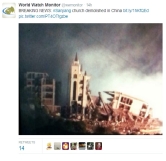
Since January, Chinese officials have removed the crosses from at least 229 churches. Some churches have been entirely demolished, and the government has issued demolition notices to more than 100 churches.
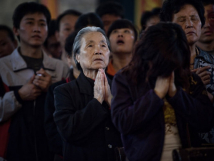
Outside Wenzhou Church, police beat protestors with electric batons for contesting the right to remove the church's cross. About 1,000 people gathered to form a human blockade around the church on the night of the attack. Up to 50 people were injured.
"Although these events appear to have been ordered by the provincial level authorities, the fact that they have continued for several months in the face of considerable domestic and international opposition suggests that they have at least the approval, if not the encouragement, of Beijing," the CSW spokesperson said.
Zheijang is an interesting target – a wealthy area, where Christians are known for supporting their local community and paying their taxes. But they also have more influence than, for example, an underground church in a rural village.
There have been several reports from Chinese officials commenting on the growth of Christianity in China. While the Western Church often equates this with growth of the underground house churches, CSW suggested that the remarks could be aimed at the rapidly growing Three-Self churches, which are seen as becoming too independent from the state.
In May a report from the University of International Relations and the Social Science Academic Press said that religion posed a serious threat to Chinese identity. Religious infiltration was listed as one of four challenges to China's national security.
The fear of foreign influence has been a long-term concern associated with religion. The 'three-selfs' of the state church are self-governance, self-support and self-proclamation – in other words it's a clear sign to foreign Christian missionaries to keep out.
The exact number of Christians in China is unknown. Official state records suggest there are between 23 and 40 million Protestants, but other estimates range up to 100 million, including the house church movement.