Barrister appointed to review Church of England safeguarding board

The Church of England has appointed a leading public law barrister to review its Independent Safeguarding Board (ISB). 

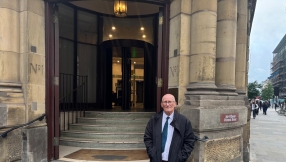
Sarah Wilkinson, a barrister with Blackstone Chambers, will lead the first phase of the independent review into the ISB.

The review was announced by the Archbishop of York, Stephen Cottrell, at the last meeting of the Church's parliamentary body, the General Synod, in July. 

It follows the controversial decision made earlier this year by the Archbishops' Council to disband the ISB and terminate the contract of its members.

Ms Wilkinson has been asked by the Archbishops' Council to "establish a clear account of the events from the conception, design and establishment of the ISB until the announcement of the termination of contracts of members, establish and identify the reasons for the action to terminate, and identify lessons to be learned based on the findings".

Wilkinson is a leading barrister who has previously represented the government in judicial review cases.

Her review of the ISB will run until the end of November, with a report into her findings due to be published "as soon as possible" thereafter. 

The Church of England said her findings would inform the work being carried out by Professor Alexis Jay, former chair of the Independent Inquiry into Child Sexual Abuse (IICSA), who was appointed in July to develop proposals for a fully independent structure to scrutinise safeguarding in the Church. 
News
People view religious education positively, study finds

The government is consulting on plans to add RE to the national curriculum.

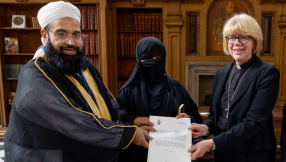
Archbishop of Canterbury withdraws award given to Muslim cleric who praised Bin Laden

Reform leader Nigel Farage said the decision to award Hafiz Muhammad Tahir Mehmood Ashrafi was "astonishing". 

How the new General Synod could move beyond the present disagreement over same-sex relationships

How might the next Synod make progress in the next five years based on a recognition that there are those in the Church of England who hold fundamentally opposed positions on the matter? Is there a way of allowing both sides to achieve what they want? Martin Davie argues that the answer to this question is ‘Yes.’

No part of London should become a free speech, gospel exclusion zone

Soho is not exempt from freedom of speech and Christian expression. And Christians do not lose their fundamental freedoms when they cross an invisible boundary into a neighbourhood associated with a different worldview. The streets of London belong to all of us, writes Andrea Williams.