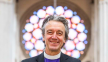
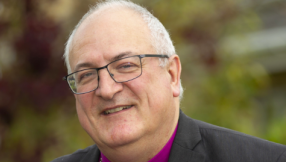
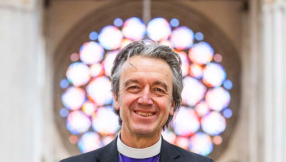
The Archbishop of Canterbury has admitted to being "too risk-averse" at the start of the pandemic.
Speaking to the Financial Times, Archbishop Justin Welby said he realised around "May" or "June" last year that it had been a "mistake" to order the closure of churches to the extent that even priests were not allowed in for private prayer.
"I got quite a few things wrong at the beginning and I learnt quite quickly," he said.
"I didn't push hard enough to keep churches available for at least individual prayer in the first lockdown. We also said clergy couldn't go in, and personally I feel I made a mistake with that ... I can make all kinds of excuses. I still think I was too risk-averse."
After the first lockdown, churches across the country were forced to move worship online. Since then, the Church has hailed the success of virtual services in attracting newcomers.
Asked how the Church could encourage these newcomers into physical churches when the pandemic ends, the Archbishop admitted to being unsure.
"I hon-estly don't know. I gen-uinely don't have an answer. We've got to go on doing hybrid stuff," he said.
The Archbishop also voiced fears that the emotional impact of the pandemic will be felt for a long time to come.
"It's a monumental thing that's overhanging us. We have a national case of PTSD in one sense, which will show itself," he said.
The Archbishop has been serving throughout the pandemic as a chaplain at St Thomas' Hospital, which is nextdoor to his official residence, Lambeth Palace, in London.
There, he has prayed with patients unable to say their last goodbyes to loved ones in person, and NHS staff reduced to tears by exhaustion.
The experience has been "life-changing", he said.
"I was in there last night . . . What I've done for anyone else, I've no idea. But what it did for me, it brought me back close to God and close to people. That's been one of the high points," he said.
Asked whether he thought the last year had been a spiritual time, he said it had been "for a huge number of people".
"It's this sense of fragility: some recognition that unexpected, uncontrollable, intensely frightening external events don't just happen to countries a long way away," he said.
The Archbishop said it was "human" and "absolutely fine" to feel angry with God in the face of grief, but he also shared his advice for how people could avoid becoming "a helpless victim of grief" - having people to talk to, "memories to hold on to", and saying "prayers of lament and protest".
"But you also need to grab hold of moments of celebration. Attack the sensitive days or they will attack you," he said.
"We have a member of the family who died many years ago, where we get together when we can as a family and we have a party on the birthday, and we celebrate the life of that person. A lot of people say they've started doing that and they've found it really helpful.
"We also buy a family present, something that's useless and we'd probably not get but [which] is fun to have. There's still the wrench and the sorrow. But there's a real sense of 'I'd prefer to feel that pain than that person never to have existed.'"
In the wide-ranging interview, the Archbishop also commented on the Royal family, who have been much in the news since Prince Harry and Meghan Markle's Oprah interview last month.
Following the interview, the Archbishop was forced to deny that he had secretly wed them three days before the ceremony at St George's Chapel at Windsor Castle.
Sympathising with Prince Harry, though, he said, "It's life without parole, isn't it? If you go back to the 1930s, Edward VIII — he was still a celeb and followed everywhere once he'd abdicated. We expect them to be superhuman."