The National Aeronautics and Space Administration (NASA) is known for fascinating discoveries from outside our planet: from liquid water on Mars to icy mountains on distant Pluto.
But ancient formations right here on Earth, particularly in Kazakhstan, are so baffling that archaeologists had to ask the space agency to help them figure out what these strange apparently man-made mounds are.
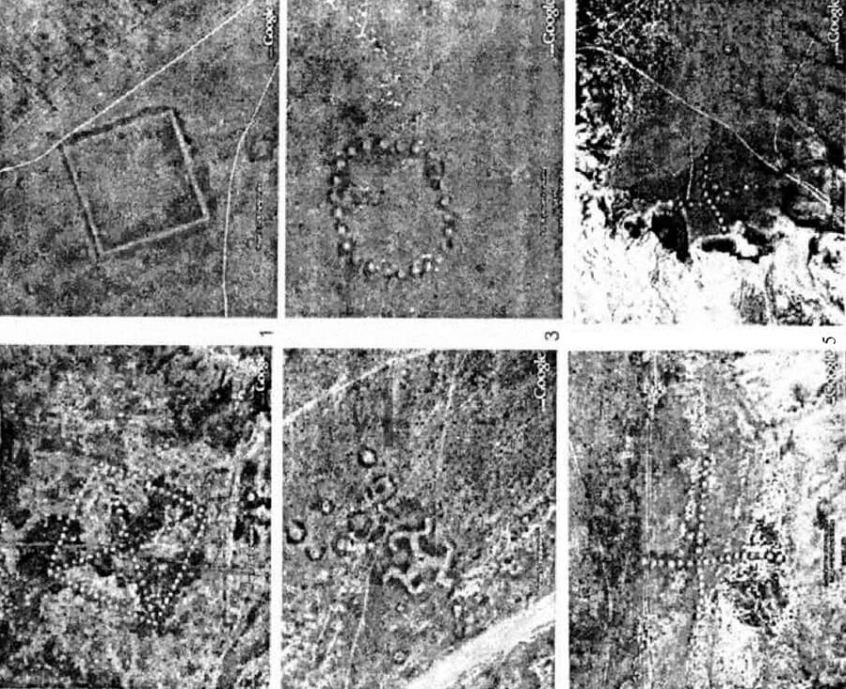
The NASA has already taken the first satellite images of the earth-bound formations, collectively called Steppe Geoglyphs.
The space agency has also instructed the astronauts on the International Space Station to take more photographs of the odd earth features, believed to be 8,000 years old.
Amateur archaeologist Dmitriy Dey first discovered the geoglyphs in 2007 using Google Earth. Since then, Dey has already discovered 260 forms of the land design, which look like strange versions of crop circles and coming in a variety of shapes.
For instance, some of the geoglyphs form small circles, which in turn build a big circle. This formation is called the Bestamskoe Ring.
Another formation, called Ushtogaysky Square, is 810,000 square feet—with each side as long as an aircraft carrier. To make the shape more complex, there is an X shape that runs through the middle of the square.
These formations, however, would seem normal when placed side by side the Turgai Swastika, which, as the name suggests, resembles the infamous swastika.
All of these formations can be found at the northern region of Kazakhstan, which offered rich hunting grounds for nomadic Stone Age tribes.
Persis B. Clarkson, an archaeologist at the University of Winnipeg, said these geoglyphs are making him and his colleagues rethink what they know about human civilisation.
"The idea that foragers could amass the numbers of people necessary to undertake large-scale projects—like creating the Kazakhstan geoglyphs—has caused archaeologists to deeply rethink the nature and timing of sophisticated large-scale human organisation as one that predates settled and civilised societies," Clarkson said, as quoted by Gizmodo.