BBC2 has just completed a six-part series in a behind-the-scenes look at the state of the Church of England in rural Herefordshire.
It has been a fascinating insight that reveals the good, the sad and the ugly in much of the church in the UK today.
The good: the four vicars are real characters. Rev Matthew Stafford, Rev Ruth Hulse, Father Matthew Cashmore and Rev Nicholas Lowton came across as lovely human beings, with warm and compassionate hearts and a desire to serve the people in their parishes. Their quirks and foibles only made them seem even more human. A large amount of what they do and how they live is to be admired although it would have been good to have a little more depth and analysis.
The sad: A Vicar's Life was billed as how four vicars are seeking to fight against the decline in the church. The sadness is that there is no indication that they are succeeding or can succeed. The problem is that it all seemed so twee and meaningless. There was little mention of God, Christ or the gospel – it seemed to be about ritual, buildings and Christian social work. It may have been that the producers of the programme did not want to have the 'religious' stuff come across too strongly and that they edited on the basis of what they think their viewers would be interested in – personalities, buildings, and people's problems. After all, Christ and his gospel are not considered to be interesting TV material by those who are not interested. Or it may be that the vicars concerned have fallen into the trap of seeing themselves as religious social workers, maintaining the fabric of the community (and the building) rather than bringing the gospel to a broken and confused world. It would have been interesting to hear what they thought the gospel actually is...
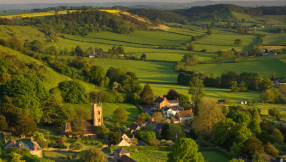
The ugly: Herefordshire is a beautiful place. The programme makes it look like heaven on earth, or at least like Tolkien's Middle Earth version of England. It is the quintessential English countryside. But the programme showed the ugliness (as well as the beauty) of human nature. The consequences of poverty, broken relationships and misuse of God's gifts were clearly evidenced. Such brokenness may be relieved by niceness, but it won't be healed. Something more radical is required.
The image of the Church of England that is often epitomised in the phrase 'More tea, vicar?' was reinforced rather than challenged in A Vicar's Life. It is an image of niceness, quirkiness and irrelevance to the people of this country today. The solution to the decline of the church is seen in the church doing ever more things that society considers valuable. Christian social work is valuable, but without Christ it can often come across as middle class religious do-gooding. A Vicar's Life was nice, quirky and good in parts– but lacking in depth, power and radicalness. In that it reflects so much of the church in the UK today.
David Robertson is associate director of Solas CPC in Dundee and minister at St Peter's Free Church. Follow him on Twitter @TheWeeFlea