Just when we thought that the madness being unleashed on our children at school couldn't possibly get any worse, it has. The BBC has produced a series of videos for schools to use when teaching physical, social and health education (PSHE). PSHE is the umbrella under which schools deliver explicit sex education and lessons on same-sex relationships. Now schools can purchase a teaching resource which blithely informs children that there are 'more than 100 gender identities'.
It's difficult to know where to start to unpack this lunacy. It would be a joke if it wasn't for the fact that it has been produced by the BBC, which many schools would accept as an authoritative source. It becomes even less of a joke with the realisation that schools are very likely to purchase this.
The BBC Teach series will be seen as a quick and easy way for schools to tick the box and comply with the new legislation making Relationships Education in all primary schools and Relationships and Sex Education (RSE) in all secondary schools in England, compulsory school subjects from September 2020.
The five-minute video which announces the bizarre statement that there are more than 100 genders can be seen here. This BBC Teach series is aimed at youngsters between nine and 12 years old.
Children are seen in the video asking questions such as; 'What does stereotype mean?', 'What is the difference between sex and gender?', 'What are the different gender identities?' and 'When do people feel like they want to change gender?' I thoroughly dislike this gimmicky way of using children. It sends a message that these are the sort of questions that kids would naturally ask. They are not. More sinister, it sends a message to children that these are the questions they ought to be asking.
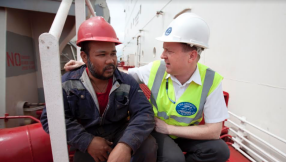
The video opens with the words: 'Are there questions you want to ask an adult but don't know how to? ... Now we're taking questions to some adults we trust'. Among the trusted adults answering the children's questions are Leo, a transgender man who is billed as a 'Health worker', and Kyra, who is a gay headteacher. A mum and a dad are also featured in the video answering questions. But there's no suggestion that children should ask such questions of their own mother or father.
This approach fits in with the narrative that parents are not to be trusted. Making lessons about relationships a compulsory school subject is effectively telling parents that they are incapable of teaching their own children about relationships and that they cannot be trusted to say the right things.
Parents are under attack and the BBC is fairly near the front of the charge. I certainly felt besieged during a recent interview on the BBC's Victoria Derbyshire programme, which you can watch here.
Our children's childhood is being constantly eroded and the BBC is providing more corrosive and corrupting material.
Antonia Tully is Director of Campaigns at the Society for the Protection of Unborn Children.