
The US Army has removed a cross that was prominently placed on the front of a chapel located at the remote base of Camp Marmal in northern Afghanistan.
Although soldiers at the central Asian base considered the cross to be an inspiring symbol, officials said that having a permanent sectarian image on the chapel violated army regulations.
As Army Regulation 165-1, 12-3k reads in part, “The chapel environment will be religiously neutral when the facility is not being used for scheduled worship. Portable religious symbols, icons, or statues may be used within a chapel during times of religious worship.”
Fox News interviewed American soldiers stationed at the base and found that some held issue with the decision to remove the cross.
One soldier referred to the decision and the regulation behind it as “a direct attack against Christianity and Judaism”.
Tony Perkins of the Family Research Council also talked with Fox News and said the decision secularised a religious building.
“There’s a sole purpose of a chapel and it’s to worship,” said Perkins.
“The timing of this – what a way to celebrate Thanksgiving.”
Joe Conn, a spokesman for Americans United for Separation of Church and State, told The Christian Post in an interview that the Army made the right decision.
“The American military includes personnel from many different faith traditions and some who follow no spiritual path at all. That diversity should be respected,” said Conn.
“It's perfectly appropriate to display sectarian symbols in military buildings when worship services are underway there, but those symbols should not be left there permanently. That would suggest that the faith represented is getting preferential treatment.”
In response to those who say that the military is targeting Christians, Conn said that if anything Christians in the armed forces receive preferential treatment.
“I know of no evidence that Christianity is being discriminated against in the military,” said Conn.
“As a matter of fact, there have been ongoing problems with military bias in favour of evangelical Christianity.”
The Military Association of Atheists and Freethinkers also welcomed the removal of the cross, considering it an example of protecting “civil rights and neutrality towards religion”.
“Christians are calling this an attack on their religion. This implies that putting up a 6-foot cross on a prominent military facility is not an attack on all competing religions,” reads a MAAF blog entry.
“A Star of David, Crescent and Star, Buddhist Prayer Wheel, or other religious symbol would be a violation just as a Christian cross is.”
The unidentified soldier who spoke to Fox News said he will comply with Army rules. But he cautioned, ““If they are able to erase Christian symbols from the military, then it can be pushed to be erased in the private sector.”

-

UN officials demand explanation for Iranian church seizure
-
Archbishop of Canterbury withdraws award given to Muslim cleric who praised Bin Laden
-
Calls for Church of England to be 'rooted in scripture' ahead of General Synod elections
-
How the new General Synod could move beyond the present disagreement over same-sex relationships
-
Most practising Christians are evangelical, study finds
-
No part of London should become a free speech, gospel exclusion zone
Most Popular
News
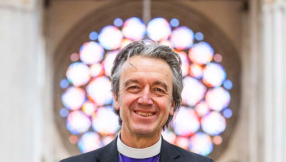
What links Tommy Robinson, Andrew Tate and the CofE’s newest bishop?
It’s not every Church of England bishop that can claim connections to both Tommy Robinson and Andrew Tate. But Andrew Rumsey is an exception.
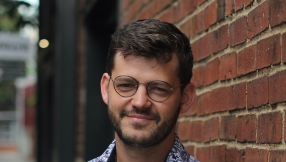
From Genesis to Revelation: The ambitious AI project turning the Bible into music
Micah Fiechter is the founder of the Music Bible, a project that has used AI to convert the entire Bible into music form across a range of genres. Christian Today spoke to Micah to find out more about what inspired him to start the project and the impact he hopes it will have.
Concerns for Pakistani teenage boy allegedly forced into Islam
Forced conversion is a problem in Pakistan.
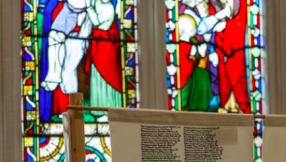
Memorial to Gaza dead removed from Leeds Minster after Jewish complaints about terrorist names
The woman behind the memorial stands by the project








