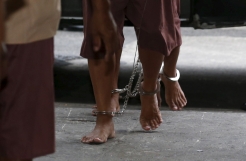
Many Asian Christian women are being treated like slaves while working as nannies and housemaids in the Middle East, particularly in Arabian Peninsula countries.
This was brought to light in a recent World Watch Monitor (WWM) report which described in harrowing details some of the sufferings being endured by these women who have been forced to work as servants of rich Muslim families by virtue of the poverty in their home countries. Some of them come from India, the Philippines, and Nepal.
Although some Arab employers are kind to their servants, allowing them weekly day offs, many treat them like slaves, an Asian man named Virat who ministers to these Christian workers told WWM.
Virat said some Arab employers see themselves as "owners" of these girls and treat them like slaves, "confiscating their passports when they start working there, making it impossible for them to leave."
He said stories abound about maids and nannies who are not properly fed, who are forced to work "like machines," and who are physically harmed and even sexually abused.
He said he had been told that some nannies had been killed by their masters, their bodies even chopped up and thrown away.
"One nanny I ministered to was repeatedly raped by the three generations of men in the house she worked in – grandfather, father and son – before she could escape to safety," Virat said.
He said some of these abused girls find refuge in safe houses run by Asian embassies where they await their travel documents to be able to leave their worksites.
Last month, two Indian women who used to work as housemaids in Saudi Arabia shared with RT.com their stories of how they were held captive by their employers. They said they were subjected to sexual abuse and torture, adding that hundreds of women are still facing the same predicament.
Also in February, a Filipino woman who used to work as a domestic helper in Kuwait filed a case against her employer, claiming that she did not receive a salary after working for his family for nine years, and was even subjected to physical and emotional abuse, Sputnik News reported.
The worker, nicknamed Nena, said she began working as a domestic helper for a Kuwaiti family in June 2005, when she was 26 years old.
During the more than nine years she spent working for that family, she said she was prohibited from leaving the house. She said her employers also abused her verbally and physically, and did not permit her to own or use a mobile phone. Because she was unable to communicate with anybody, her family in the Philippines thought she was dead.
After nine years, she found an opportunity to escape in 2015 when a newly-hired housemaid managed to acquire a mobile phone, which she used to contact her family, who in turn contacted the Philippine embassy in Kuwait, eventually leading to her rescue.