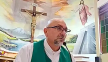
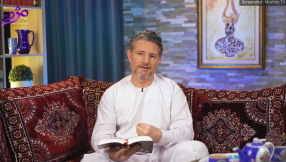
Former Church of England bishop Michael Nazir-Ali has defended his decision to join the Catholic Church.
Nazir-Ali was the Bishop of Rochester for 15 years and a leading figure in Anglican evangelicalism, helping to found the Gafcon orthodox fellowship.
Last week, he announced he had joined the Catholic Ordinariate established by Pope Benedict to receive disillusioned Anglican clergy, including those who are married.
Nazir-Ali writes in the Daily Mail that he "could never have imagined" at the time of his ordination 45 years ago that he would one day become a Catholic, but that he had been driven to the decision after being left "deeply saddened" by developments in the Church of England.
He expressed frustration at "endless self-lacerating about Britain's imperial past", and church councils and synods "permeated by activists who each have a single-issue, often faddish agenda, whether it is about cultural correctness, 'climate change', identity politics, multi-culturalism (which actually encourages communities to live separately) or critical theory on race, religion and gender – a neo-Marxist theory developed to create conflict by dividing people into victims and villains".
He further maintained that he had "no choice" but to join the Catholic fold because the Church of England had become "splintered" into "a loose collection of churches", many of which have "conflicting interpretations of Christianity".
"The Church's values were everything I believed in: helping others to come to faith and be formed by it, tolerance and freedom, the sanctity of the person, of marriage and the importance of the family," he said.
"Back then the Church celebrated and defended those values. It wasn't reticent, apologetic or ashamed of them."
He said the change was "a bittersweet moment" because of his regret over the current Church of England, mixed with optimism about the opportunities he sees for upholding human rights and advocating for persecuted Christians as part of the Catholic Church.
"I have wrestled with this for several years, but reluctantly realised that I have no choice," he said.
"Too often I have felt alone, at odds with the Church. Sometimes it is better to have "the wind at your back rather than constantly battle against it.
"It is a deeply personal decision. I am moving from one Church to another, in a fulfilment of my spiritual needs. It is not a 'conversion' from one religion to another."
He added, "The Catholic Church has had its share of problems, but the faith and values are those that I also hold and which I feel are being eroded in the Church of England."