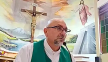
Rev Marcus Walker, Rector of Great St Bartholomew's in the City of London, is founder of the Save the Parish campaign, launched in the Church of England this summer.
He stood for the CofE's legislative body, the General Synod, in October along with other candidates concerned for the future of the traditional parish church and was elected to represent London Diocese.
Before he was ordained in 2011, Rev Marcus, 40, worked as a parliamentary researcher, having read History at Oxford University.
Before becoming Rector of Great St Bartholomew's in 2018, he was Deputy Director of the Anglican Centre in Rome, the Anglican Communion's embassy to the Vatican.
Christian Today spoke to Rev Marcus about his plans for the Save the Parish movement and his experience of his first General Synod in November.
CT: What are your reflections on your first General Synod?
MW: It's a very interesting body and has its own culture and mood, which, as a new boy, I'm only starting to pick up. The whole procedure is very carefully managed and is designed to prevent real debate and discussion at any point – whether in questions or while debating actual measures.
I hope it can open up over the course of the next five years and be a vehicle for really engaging with the issues which concern the ordinary people and parishes across the country.
CT: What are your plans for taking the Save the Parish movement forward?
MW: There are three strands really. The first is reactive: we have to keep an eye on all the proposals coming out of the national and diocesan centres and see whether these will make it easier for parishes to survive and thrive or not – and to rally the troops when the answer is "not".
The second is more proactive: to give resources and advice to parishes across the country who are fighting for survival.
The third is much more difficult but ultimately the absolute key to the whole thing: working out ways to funnel money back upstream to the parishes and allowing people on to ground to have the resources they need to thrive.
For all of these we are going to need to create, and are well on the way to creating, a formal structure and a means of receiving and spending money on these projects, while harnessing the amazing experience of our supporters across the land.
CT: You have expressed concerns about CofE plans for 10,000 new lay-led church plants and the potential threat to traditional parish churches. Is it really either-or in terms of parish churches and church plants?
MW: It depends what you mean by church plants. If these are revitalising parish churches and reigniting the light of Christ in places where it has flickered out, then this is great and much to be supported.
If these are new communities, put into parishes but having nothing to do with those parishes, and costing the kind of money that would be transformative for the local church, then it's very problematic.
As for the 10,000 lay-led churches, if all we're talking about is Bible studies and Alpha Courses and the rest, then that's an excellent idea.
If it's actual church structures using unpaid lay labour and meeting in people's private houses, then it is not only going to be a vast waste of money but will almost certainly prove to be a safeguarding catastrophe - among many other entirely predictable disasters.
CT: What is the future for High Church Anglicans like yourself in the CofE in your view?
MW: Exciting! We're on the back foot at the moment, which is not a bad place to be. It means we're where the new ideas need to come from, where the Spirit is likely to start bubbling up – and we're seeing this already with the growth of Cathedral services and the Prayer Book coming back in fashion among Gen Z.
The wonderful thing about the CofE being in continual tension between different churchmanships is that just when you think one side is out – bang! That's where the new revival comes from.