The Taliban takeover of Afghanistan is fuelling Islamist extremism in Iraq, leading to "further persecution" of the Christian minority, one of the Middle East's leading Catholic bishops has warned.
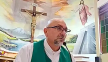
Bashar Warda, Archbishop of the Chaldean Catholic Church, was speaking to the Roman Catholic charity for persecuted Christians, Aid to the Church in Need (ACN).
Archbishop Warda, who is based in the Kurdistan capital Erbil, told the charity that recent events in Afghanistan have emboldened extremists in Iraq.
"Afghanistan and Iraq are very different places. But the takeover of the country by the Taliban certainly provides encouragement to those who support that type of regime," he said.
The Archbishop warned that Islamist State extremists are still active in the country and could return to power in Iraq and Syria.
Commenting on President Joe Biden's announcement in July that he would withdraw the US combat mission to Iraq by the end of the year, Archbishop Warda said the potential insecurity will have a negative impact on Christians and other religious minorities.
"What our history has taught us, especially our recent history, is that in any time of instability and conflict it is the minorities who suffer first.
"So, to the extent that any change in US involvement in Iraq leads to an increase in instability, certainly we are concerned that this would lead to further persecution of the religious minorities," Archbishop Warda said.
Fellow charity for persecuted Christians, Open Doors, has also highlighted the worsening situation for Christians in Iraq.
The charity's UK arm has questioned a claim by Iraq's Prime Minister Mustafa al-Khadhimi that it is safe for the million-plus Iraqi Christians who have fled the country in recent years to return home.
An Iraq-based partner of Open Doors reported that there are still too many dangers for Christians in the country and too little opportunity.
Father Behnam Benoka told the charity: "How can Christians return to Iraq while many are still living in undignified conditions and facing persecution from Sunni and Shia fundamentalist groups?"
Open Doors reports that following the defeat of the so-called Islamic State in 2017 some Christians have returned to Iraq but have found little in the way of basic services, jobs, or security.
There are reports of a resurgence of IS and local militias fighting for control. Sometimes, returning Christians find their homes intact, but occupied by strangers, the charity says.
"Years of war and conflict have driven an estimated 90 per cent of Iraq's Christians out of their homeland: what was a community of approximately 1.5 million people in the early 90s, has dwindled down to an estimated 175,000 in 2021," Open Doors reports.