BBC reporters told not to attend 'controversial' public demonstrations or gatherings

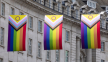
A radical shake-up of rules on impartiality may mean that BBC journalists can no longer attend LGBT pride events. 

The rules introduced by BBC director general Tim Davie on Thursday tells staff working in news, current affairs and factual journalism that they "should not participate in public demonstrations or gatherings about controversial issues". 

"As with social media activity, judgement is required as to what issues are 'controversial' with regard to marches or demonstrations, though it should be assumed that most marches are contentious to some degree or other. If in doubt, advice should be sought before attending," the guidelines read.

Staff outside of news, current affairs and factual journalism are permitted to attend such events as private individuals. 

The updated guidance follows longstanding complaints from right-leaning sections of society that the BBC is biased. 

BBC journalists told the Guardian newspaper that there was no explicit ban on LGBT pride events but that the growing opposition to trans rights in the UK makes it more likely they will be deemed controversial. 

The ban for news staff also covers Black Lives Matter marches, the newspaper reported.

Last year, employees with BBC Northern Ireland were prevented from taking part in Belfast Pride after complaints from politicians that their presence would imply support for same-sex marriage.

News
Archbishop of Canterbury withdraws award given to Muslim cleric who praised Bin Laden

Reform leader Nigel Farage said the decision to award Hafiz Muhammad Tahir Mehmood Ashrafi was "astonishing". 

How the new General Synod could move beyond the present disagreement over same-sex relationships

How might the next Synod make progress in the next five years based on a recognition that there are those in the Church of England who hold fundamentally opposed positions on the matter? Is there a way of allowing both sides to achieve what they want? Martin Davie argues that the answer to this question is ‘Yes.’

No part of London should become a free speech, gospel exclusion zone

Soho is not exempt from freedom of speech and Christian expression. And Christians do not lose their fundamental freedoms when they cross an invisible boundary into a neighbourhood associated with a different worldview. The streets of London belong to all of us, writes Andrea Williams.

Church of England blessing same-sex relationships 'a bridge too far'

Earlier this year the Church silenced a group of former-homosexuals who wanted to tell of the change in their lives.