NT scholar on discovery of giant trove of Bible manuscripts
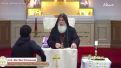
|PIC1|Each year, only two or three New Testament manuscripts handwritten in the original Greek format are discovered. But a U.S. expedition last year to the former communist country of Albania led to the discovery of 47 New Testament manuscripts, and at least 17 of them unknown to Western scholars.
Dr Daniel B. Wallace, the director of the Center for the Study of New Testament Manuscripts (CSNTM) in Frisco, Texas, spoke to Christian Today this month about his center's major discovery, the importance of using state-of-the-art digital photography to preserve the documents, and why hundreds-of-years old manuscripts are important to the average modern-day Christian.
The following are excerpts taken from the interview:
CT: What are these manuscripts? Are they the original ones written by the disciples or just early manuscripts?
Wallace: Well, we don't have the original documents of the New Testament anymore. They deteriorated a long time ago. Instead what we have are copies and later copies and later copies and later copies. Until the time the printing press was invented, all of these manuscripts had to be copied by hand. There was no way to print them because there was no printing press, so all of the manuscripts of the New Testament that were done by hand take us all the way up until the 16th century.
Now we have over 5,700 of them that have been cataloged; that is a lot of Greek New Testament manuscripts. But every year normally only one or two are found, and for us to discover as many as 39 manuscripts in one place is almost unheard of.
CP: Are there any other institutes that are also preserving these early copies of Scripture with the same technology you are using? We just want to have an idea of how unique your technology is and how unique your centre is.
Wallace: I'll put it in perspective this way. There is one institute in the world; it's called the Institute for New Testament Textual Research, and that's in Munster, Germany. Since 1959, they have been microfilming New Testament manuscripts, but the microfilm quality is very bad and in fact sometimes it is completely illegible, and they realize that. But at least what they have done is gotten 90 percent of all the New Testament manuscripts on microfilm and that is better than nothing.
We started the Center for the Study of New Testament Manuscripts in 2003 in Munster and we photographed the actual manuscripts that they own to start with and they put them on their website. So they are very excited about the work that we are doing, but they have not taken one digital photograph; that is not what they have done. They are no longer doing any sort of photography of manuscripts. It is really kind of up to us and others that are doing it.
In terms of the uniqueness with other institutes, CSNTM is the only institute in the world that is dedicated to taking high-resolution digital photographs of all Greek New Testament manuscripts.
Now there are others who are dedicated to photographing this manuscript or that manuscript or are doing outsourcing. For example, Yale University might outsource the digital photography of their manuscripts to some other party, but it would be the manuscripts that they have in their library and some of them are New Testaments but most are not.
They have five New Testament manuscripts, for example. But our goal is to go to all of these sites that have the New Testament manuscripts and photograph specifically those with very high resolution digital cameras. These are top end professional grade cameras that we use that just do a magnificent job.
CT: When did your team go to Albania and when did they come back?
Wallace: They went in July 2007 and came back the first week of August 2007. There were really two teams that were there. We sent a team of four people to start with that arrived in Albania, and when they got to the national archive in Tirana they discovered that there were a lot more than 13 manuscripts that we knew existed there.
Instead, there were 47 New Testament manuscripts and at least many of these if not most of them have never been heard of before. The Western scholars were completely unaware of them.
So they started to photograph those but realized soon enough that they wouldn't be able to get the job done because we had budgeted two and a half weeks for the first team to go and they were all going to come home; we had already purchased a ticket for them to come home. And we figured they could take 6,000 pictures in those two and a half weeks.
Well now with 47 manuscripts to photograph it looked like there were 18,000 photographs to take and there is just no way they could get that done in two and a half weeks. We had to quickly get a second team out to replace the first team so they could finish the job.
CT: Could I ask out of curiosity, why did you only release this news now? It has been quite awhile since August.
Wallace: (Laughs) As far as manuscripts and discovery and things like this go this is a very early announcement. For example, the largest single cache of manuscripts ever discovered was in 1975 at St. Catherine Monastery in the Egyptian desert. They discovered these manuscripts in a hidden storeroom in 1975. Well the news didn't really get out on what they had discovered for 25 years.
The other thing is we wanted to tell other people as soon as we could on what we discovered, but the fact is we weren't exactly sure what had been discovered. So this semester I taught a course called 'New Testament Textual Criticism' at Dallas Theological Seminary, where I am a professor. And I had the students go through hundreds of these pages of manuscript to try to determine exactly what they were saying.
So we were trying to discover what we had discovered, in other words. So with all the assistance by the end of the semester I was getting much closer to being able to say, 'OK, this is what we got, and I think we can make an announcement to the media about how many New Testament manuscripts we discovered and what is in them.'
We are still looking over the data. We want to get an official journal article in a scholarly journal published, but we don't have all the data figured out yet.
CP: Could you explain to the average Christian why preserving these manuscripts with digital photography is important?
Wallace: I would be happy to. I think there are several reasons why this is important. One of them is that when we think of the Bible today we think of the Bible as the thing that is printed on Bible-thin paper and is stuck between cow-hide leather and we call that the Bible with gilded edges. But that is not how historically it has been.
Every Bible that is published in printed version is based on manuscripts. So our link to the original is only through these manuscripts. We couldn't possibly tell what the original said without the manuscripts. Consequently, the more manuscripts we discover, the more manuscripts we photograph, the more manuscripts we analyze, the closer we will be to the original wording of the New Testament.
Again, what a lot of Christians don't realize is that their Bibles change in some subtle ways in terms of the wording based on new manuscript discovery and based on wrestling with particular textual problems. There are whole doctoral dissertation done on one word in the Greek New Testament - whether it is authentic or not, whether it goes back to the original or not.
So for the average Christians they don't realize all the hundreds of thousands of hours of research that have gone in to give them the Word of God. I think it is important for them to realize if we believe that the Bible is the inspired Word of God, then we owe it to ourselves to try to recover the exact wording of the original as much as possible.
Another reason I would give is that by preserving these manuscripts digitally we actually have a better picture of them than looking at the actual manuscripts. In other words, digital photographs, the quality we use, are always easier to read than the actual manuscripts.
We can blow these things up to 3 feet by 4 feet, it's just unbelievable. You can zoom in with the picture well but with the manuscripts you can't do that. Consequently, for us to examine these manuscripts on the computer it is giving us an opportunity to read them without hurting that manuscript.
We have photographed some manuscripts that we've told the librarians that if you open this manuscript again it will completely turn to dust. They've been that fragile. And we urged them to never open the manuscript again. We photographed other manuscripts where the library itself said this is the last time this thing will ever be photographed. It was microfilmed years ago and the digital photographs were the last ones to be done. So they never want to see these manuscripts photographed again because every time you handle a manuscript you hurt it a little bit. It is almost unavoidable.
So when we photograph them we wear cotton gloves, we don't use flash photography, we take extra special care to care for the manuscripts. Then we give these monasteries DVDs of the manuscripts so when scholars come and want to study them they don't need to look at the manuscripts but they can look at the DVDs.
CT: How did you receive permission to photograph the manuscripts in Albania? Did the situation in the country change or what factors made it possible?
Wallace: That's a great question. I'm not sure what factors made it possible but I know that Albania was a communist country almost immediately after World War II until fairly recently. Consequently, western scholars couldn't get in there to look at the manuscripts. When we wrote to the director of the national library, we told her what our credentials were and where we had been in the world to photograph manuscripts, and she wrote back and said, 'We're delighted to have you come and photograph our manuscripts.'
So it was that open door that occurred because I think we already established our legitimacy and credential with others. Nobody else was able to get in because perhaps they didn't have the same credentials. I'm not exactly sure. But frankly as far as I'm concerned, the Lord is more concerned about getting these manuscripts preserved than we are because they are the copies of the ancient scriptures. So He is the one that opens a lot of doors for us that we wouldn't know otherwise.
CT: When you say that no one else has gotten in, does that mean no one else has even microfilmed the manuscripts?
Wallace: As far as we are aware of, only two of the manuscripts have ever been photographed at all and that was by microfilm. This was decades ago before the country became communist. So this is a huge discovery and huge opportunity for us to be able to photograph all 47 New Testament manuscripts.
CT: Why has Albania been so secretive with the number of manuscripts it possessed? You said that you only knew there were 13 but then there were 47.
Wallace: Well, there are a couple of reasons I suppose. One is that they don't know whom they should release it to. When we were there, they told us, 'We are just not sure how important these manuscripts are. Can you help us by telling us the value of these things? What's in them and train us so we can better understand what we have.'
So in a large respect, since it is not a Christian nation and since they only had one person in the library who even knew a little Greek, there wasn't much they could do to figure out what exactly they had.
So it is kind of like a person that has a very old Bible in a different language and it's not that they are holding back information, but they don't even know who to talk to find out what the Bible is and how old it is and what language it is and that kind of thing. I think that was the case with Albania.
When they learned that we were going to come and photograph the manuscript and that we knew Greek that really encouraged them because they thought this group might just make this news to the world available. They were very pleased with that.
CT: Could you briefly explain historically or geographically why there are so many manuscripts in Albania?
Wallace: I think the reason is because there was an old Roman road that went through Albania - this is one of the reasons - so there was a lot of travel through Albania in ancient times. And they did have monasteries that grew up during the last couple of centuries.
These monasteries were where more than likely these manuscripts were actually produced, but not all of them would be produced in Albania. You have monasteries in a number of ancient sites in both Europe and the Middle East and this is especially where manuscripts get produced. But say a new monastery is built in the 10th century, what often happens is a very important benefactor would donate to that new monastery an ancient manuscript of the Scriptures. And so we don't know where that manuscript came from because typically there is no record of that kind of thing.
So probably some of the earlier manuscripts in Albania probably didn't start out there but they ended up there once these ancient monasteries were opened. That's my best guess on how they got there. Nevertheless, over the centuries there were two or three monasteries in Albania that have kept the manuscripts or produced them or a combination of both.
CT: Will Albania put the manuscripts in a museum where the public can see it, or what do they plan to do now that they know the value of them?
Wallace: Well, they actually had one of their manuscripts on display not too long ago. This is the one that everyone knew was definitely there. It is a purple codex from the 6th century. A purple codex is one where the parchment has been dyed purple and all the ink is in silver or silver and gold. And in case of the Gospel, which is what this manuscript was, all the narratives were in silver and all the words of Jesus are in gold. So it is sort of like the first red letter edition except it is the first gold letter edition.
What they did is they put that on display three or four years ago and, in many respects, Albania treats that one manuscript as their greatest national treasure. It has been classified with UNESCO (United Nations Educational, Scientific and Cultural Organization) as a world treasure and the line of people to get in to see that manuscript wrapped around several blocks. I believe it was a quarter-of-a-mile long, for people to just come in to view it for a few minutes.
So for us to come there and photograph it was an enormous privilege.
CT: How will theologians and scholars use these manuscripts you photographed? What impact will it have on the Christian community?
Wallace: Well, I think the first thing that needs to happen is we need to examine and analyze these manuscripts in detail. And what that involves is either transcribing them word for word, letter for letter, or what is called collation where we simply compare it to a standard published Greek New Testament and we list all the differences that manuscript has. It is sort of a quick and dirty way to do a transcription. But once we do that we can determine much more what the original wording of the original text was because these manuscripts are a window to that.
For example, the most important discovery we found among these manuscripts was that there were three of them that didn't have the story of the woman caught in adultery at all. And the manuscripts we are talking about are a little bit later than 9th century and all the way to the 14th century, which is pretty late. But three of them did not have the story of the woman caught in adultery. And [while] that is rare in latter manuscripts, it is far more common in the early manuscripts. These manuscripts may well have a fairly decent pedigree that go back to earlier times.
One of the manuscripts that had it had it at the end of the Gospel and that is even rarer. There are very, very few manuscripts that have the story appended to the end of the Gospel instead of its normal place in John 8. So this kind of information helps us determine where did that story come from and gives us a little more information.
Basically the way to think about this is let's say you are putting together a jigsaw puzzle of a thousand pieces but you're missing about 200 pieces. It is pretty hard to figure out how to connect the dots. What we just discovered is 47 mores of those pieces.
CT: Is there anything else you want to add?
Wallace: We're searching for other manuscripts. We have leads on over 200 more manuscripts that are not yet known in the Western world. In order to go to these places and order to do the photographic work we rely on both donations from individuals and foundations.
Or center does not have any creedal statement - even though we are obviously interested in New Testament manuscripts and I am obviously a committed Christian - but that is not part of what we are expecting to have in terms of the people and groups that we work with.
Some of these manuscripts are owned by non-Christians - like the national archive in Albania; it's 70 percent Muslim in the country. There are still quite a few communist in the country. So we want to work with groups like this and really make these manuscripts known.
Over the next 18 months I am going to be traveling to eight or nine different sites with a team of four people. We are hoping to photograph as many as 200,000 pages of Greek New Testament manuscripts. It is a lot of work and we'd appreciate prayer and support.
On the Web: www.csntm.org