BBC Poll Reveals Split of Public Opinion on Religious Issues
The Religious Hatred Bill has become the centre of controversy again as it makes its way through parliament. The bill if it comes into force would make it offence to use words or actions, including broadcasting that would be likely or intend to stir up religious hatred.
Already the laws in UK protect specifically the interests of Sikhs and Jews, but this protection will be extended to other faiths through the new proposals.
Much of the debate regarding the bill has been directed at the Muslim faith. In a recent BBC poll indications have arisen that there could be a vicious cycle in which many Muslims feel a sense of unfairness and feel discriminated against in society. This, it has been said, could be a reason they can become prey for others to drive them towards extremism. This process is one which the government is trying to break down by introducing the new religious law.
However, there has been an obvious decreasing enthusiasm for the religious hatred bill as being the answer to the problem, say the BBC.
In January, an ICM poll was carried out for the Guardian newspaper; this indicated that 57% of people agreed that new laws were "needed to stop those who want to stir up hatred against people of particular religious faiths."
In addition, only 36% of people in that poll said "people should be allowed to express their opinions freely, however hateful."
Yet in the days after the London bomb attacks the BBC has carried out a new poll on its website; finding that support for the legislation had fallen to 51% saying they agreed with the bill fulfilling the aim of "preventing abuse of inciting hatred of people because of their religions."
Those that thought that "people from criticising those with other religious beliefs is an unjustified limit on free speech" had increased to 43% for people of faith. Interestingly people of no faith only agreed with this point at 44%.
Comedians have continuously argued against the proposed bill, and said that it could see them being prosecuted for making fun at religious figures. A number of Christian groups have also spoken out against the bill, including the Evangelical Alliance UK, many stating that even some elements of regular services could become illegal under the proposals.
The government has rejected these arguments and said that the groups had misunderstood the core of the proposals. Government representatives have said that the bill is only intended to protect the believer, and not to protect people’s beliefs, and certainly would not outlaw simple criticism of religions.
The BBC poll also suggested that the public was evenly split on the issue of whether broadcasters should avoid language or story lines that could cause "any of the main religious groups to take offence." 49% of voters stated that such issues should be avoided by broadcasters, whereas 45% said that broadcasters should not use this issue in deciding what they should transmit.
Among Christians, the BBC asked voters whether the Church should ordain gay clergy; the issue that has brought a huge rift within the Anglican Church. The results indicated clearly the delicate nature of the issue as just a 1% margin of difference was seen, with slightly more people saying that gay clergy should be ordained. This support margin increased further among non-Christians to 9%.
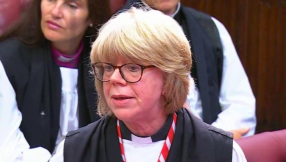
In addition, the most recent debate to have been discussed by the Church – women bishops – was put before voters. An overwhelming majority of voters believed that women should be allowed to undertake this higher office within the Church. A substantial 78% supported this move by the Church.
It is now a decade since the Anglican Communion first ordained women as priests, and just last week the Church of England made the way for the barriers to be taken down for women to be appointed as bishops. The Roman Catholic Church, however, has still resoundingly stated its opposition to women priests.
The BBC News report on its poll stated, "Of the 1,005 people questioned for the poll, 61% said British law should respect religious values, with only 33% disagreeing."
The comment continued, "That finding seems to chime with what seems to be the main trend in public attitudes to the established churches. People may be drifting away from regular churchgoing, and be more willing to pick and mix among the rules and exhortations of mainstream Christianity, but they're still glad the churches are there."